Membranes and Papers
Immunoassay Tests

Information
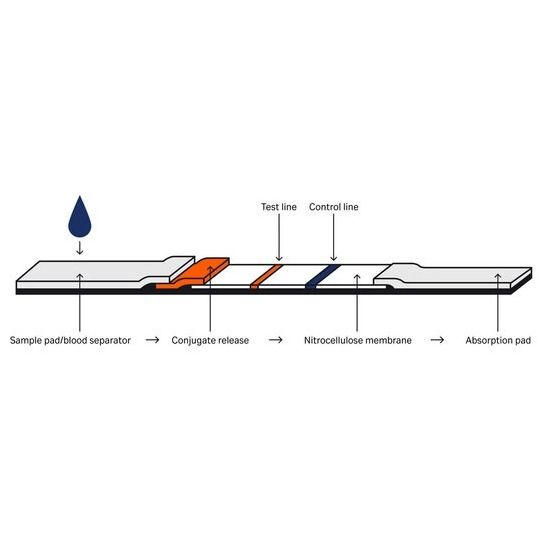
Nitrocellulose membranes are a key functional component of lateral-flow immunoassays. The membrane must provide sufficient protein binding to produce a sharp and intense capture line, but at the same time the level of nonspecific background must be low enough for easy interpretation of the results. Our nitrocellulose membranes are available in a range of wicking rates and formulations, backed and unbacked.
Our cellulose filters are manufactured from high-quality cotton linters treated to achieve an alpha cellulose content of at least 98%. The glass microfiber filters are manufactured from 100% borosilicate glass. These depth filters combine fast flow rates with high loading capacity and the retention of very fine particles, extending into the sub-micron range.
In a flow-through immunoassay, the sample is applied directly to the membrane surface and is allowed to wick through the membrane into an absorbent paper below. While technically close to ELISA assays and requiring few materials, the sample preparation process can be complex. It requires several pipetting steps in defined order. This can lead to a higher failure risk due to pipetting errors, making home use impractical as a lab and trained medical staff are required.
Dipstick colorimetric assays, in which a cellulose pad is impregnated with a color reagent, are widely used in everything from urine testing to environmental assays. The base cellulose is a key part of the system, and the correct choice of absorbency, wicking rate, and wet strength are critical to producing a working assay. Our range of cellulose materials for dipstick colorimetric assays offers highly consistent and inert substrates for absorption of the active chemicals required for development of dipstick tests. The purity of the cellulose base material coupled with our quality manufacturing practices make these papers an excellent choice for large-scale manufacturing.